
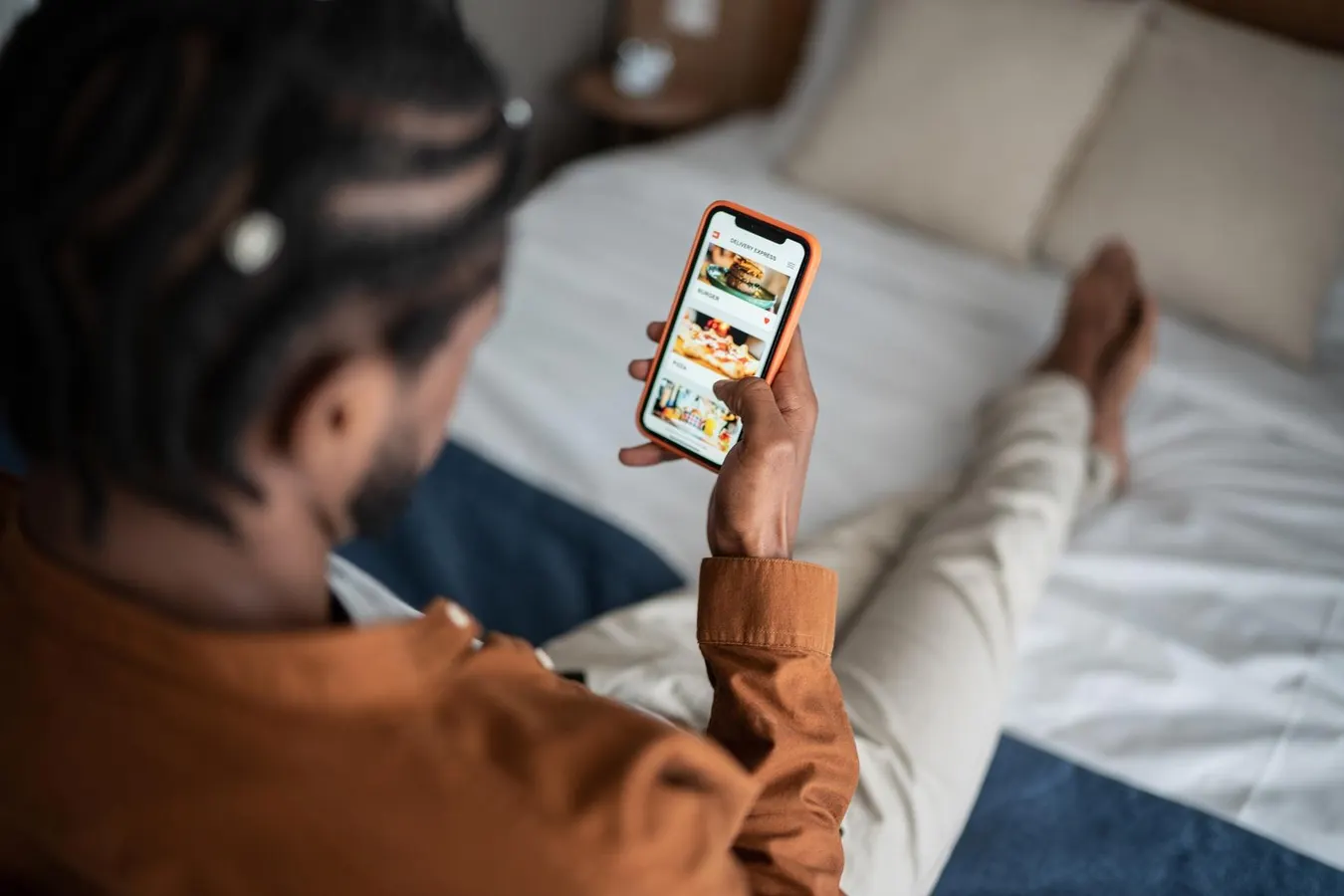

Young man ordering food online with smartphone at home
getty
For a long time, talks about trust and safety in the gig economy have mostly been about consumers: Will the drivers come? Will the deliveries come? Is the person who made the app who they say they are?
Recent data reveals that workers are increasingly bearing the cost of this question.
TransUnion’s Winter 2026 Gig Economy Worker Report says that many gig workers are doing things that some platforms have prohibited, like renting or selling access to their accounts so that unverified users can work under their names. While people often call the practice outright fraud, it is becoming less of an outlier and more of a way for people to deal with a turbulent job market.
Almost half of the polled gig workers shared they’d rented or sold an account. Younger workers, especially millennials and Gen Z, were the most likely to say they had done this. One out of every four people said they had rented out an account themselves.
The results make it harder to believe the common story that fraud in the gig economy is mostly caused by bad actors on the fringes. They instead point to a system where economic stress, inconsistent enforcement, and an uneven safety infrastructure are slowly changing how workers act.
Colleen Thiry, director of TransUnion’s gig economy business, says the company made a point of presenting the results in a neutral way. This was not to excuse bad behavior, but to figure out how workers got there.
“There has been a lot of research on how safe and trustworthy gig platforms are for consumers,” she told me. “But we wanted to see what trust and safety look like for the earners themselves, since both sides need to feel safe and secure when they talk to people they don’t know.”
Workers talked about many ways to share accounts in interviews and surveys. In some cases, organized crime groups take over accounts. In other cases, workers said they let friends or family members who couldn’t pass identity checks or didn’t have enough driving history to qualify to use their accounts.
That difference is important. It implies that the behavior is not consistently motivated by malevolent intent but rather by structural impediments.
One out of four people who answered said they wanted to stop doing gig work after being scammed or abused, but they didn’t feel like they could because they needed the money. The report says that this financial dependence may also make people less likely to report problems and change the data that platforms use to make safety features.
Only 45% of the people who answered the survey think that gig platforms have very good ways to check people’s identities. And even though platforms have spent a lot of money on background checks for workers, Thiry says that many of them don’t keep up that level of scrutiny over time or apply it equally to consumers.
She said, “There has been a lot of money put into checking workers up front.” “But platforms need to keep checking things like devices, biometrics, and making sure the same person is using the account every time. And they need to treat customers the same way, not just workers.”
That imbalance might help explain another surprising finding: 34% of gig workers said that customers cheated them while they were working. 43% of people said they had personally experienced tip-baiting, which is when a customer promises a big tip to get quick service but then lowers it after delivery.
But a lot of the time, incidents are not reported. Only about two-thirds of workers who were victims of fraud said they told the platform about it, and only half told the police. Thiry says that workers who had been cheated on were also less sure that in-app safety features would keep them safe, which is a sign of a deeper loss of trust.
“It’s hard for platforms to put the right protections in place if they don’t know what’s going on,” Thiry explained. “There is a chance to teach workers more about how to report incidents and what happens when they do.”
Verification as a way to stop things from happening, not as a punishment
The report says that stronger identity checks could not only stop fraud, but also show that the platform is responsible.
People who had been victims of fraud had higher expectations for verification on both sides of the platform. This included background checks, biometric confirmation, device verification, and address validation. It’s important to note that these workers were more likely to want to get rid of problem users completely, not just flag them.
TransUnion says that can happen using device intelligence, IP analysis, and cross-platform fraud signals to find risk without impeding the consumers’ user experience.
“Fraudsters are very smart. Companies change once they learn how to stop one kind of fraud,” Thiry said. “That’s why platforms need to keep changing by adding new data points and verification tools over time.”
With that, the report brings up an important question: What happens if platforms don’t respond? Economic forecasts for early 2026 show that things will still be unclear.
Thiry pointed out that renting accounts could become more common, or it could just become a normal part of the gig economy’s operating costs. There is a risk with either outcome. Weak verification puts workers and consumers at risk of physical and financial harm, and underreporting keeps platforms from seeing how big the problem really is.
In a broader sense, the data shows that gig platforms are getting close to a trust threshold. Even when conditions are dangerous, workers will keep going, but that doesn’t mean they are sure of themselves.
The report asserts that trust and safety are now essential features. They are necessary to keep the gig economy’s labor supply going.
Without meaningful investment on both sides of the transaction, the system may continue to function, but increasingly through gray-market workarounds that undermine its long-term stability.
Story & News / Job: Storyarchive
Website Tools: Toolsa2z
Apparel: Amazdeel
Digital Product: Kashtee
FunCapsule: @funcaspule
Kidu Kids (Students & Kids): @Kidu_Kids_Learning
Knowing Quran (For Muslims & All): @Knowing-Quran
Romantic Song (Lovers): @RomanticLovesongDilse
Comedy Videos: @theshorts21