
The United States is home to some of the most vibrant and diverse festivals in the world, celebrating everything from music and food to film and cultural heritage. These festivals have evolved over decades, drawing millions of attendees annually and becoming integral parts of American culture. In this article, we explore the history, significance, and modern-day celebrations of the country’s most iconic festivals.
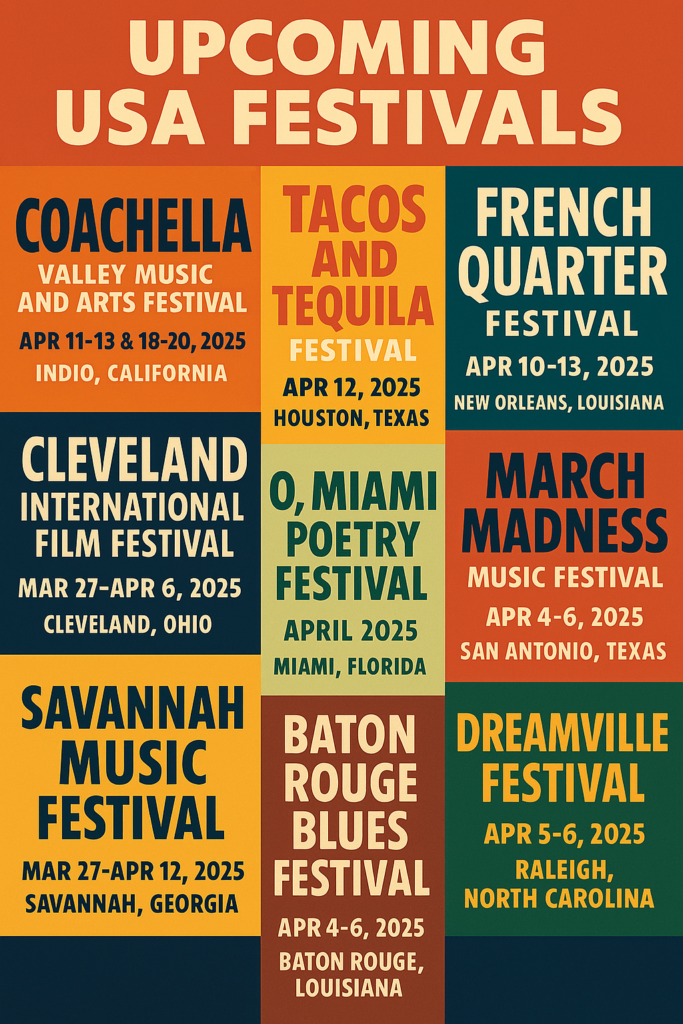
1. Coachella Valley Music and Arts Festival
History: Established in 1999, Coachella was inspired by a Pearl Jam concert held at the Empire Polo Club in 1993. The first official Coachella festival featured headliners such as Beck, Rage Against the Machine, and Tool but struggled financially. It gained immense popularity in the early 2000s, becoming one of the most prestigious music festivals globally.
Modern Celebration: Held annually in Indio, California, Coachella spans two weekends, featuring world-class artists, art installations, and fashion trends that set the tone for festival culture worldwide.
YOu may like : Holi Festival: The Colors, History, and Cultural Significance
2. Mardi Gras – New Orleans
History: Mardi Gras has its roots in the early 18th century, brought to Louisiana by French settlers. By the 19th century, the festival had grown into a grand event featuring elaborate parades, masked balls, and street parties.
Modern Celebration: Today, New Orleans’ Mardi Gras attracts millions of revelers each year, with extravagant floats, live music, and traditional king cakes marking the occasion.
3. French Quarter Festival
History: Founded in 1984 to support New Orleans’ historic district, the French Quarter Festival started as a small community event and quickly expanded into the largest free music festival in the South.
Modern Celebration: Featuring more than 1,700 musicians performing across multiple stages, this festival highlights Louisiana’s unique musical heritage, including jazz, blues, and zydeco.
4. South by Southwest (SXSW)
History: SXSW began in 1987 in Austin, Texas, as a small music festival showcasing emerging artists. Over time, it expanded to include film, technology, and interactive media, making it one of the most influential festivals in the world.
Modern Celebration: Today, SXSW attracts industry leaders, tech innovators, and music lovers, featuring major film premieres, panel discussions, and business networking events.
5. Burning Man
History: Burning Man started in 1986 when a small group of friends burned an effigy on Baker Beach in San Francisco as an expression of art and self-expression. It moved to Nevada’s Black Rock Desert in 1990 and has since grown into an experimental arts and culture festival.
Modern Celebration: With no corporate sponsorships, Burning Man emphasizes radical self-expression, community participation, and artistic innovation, culminating in the burning of a massive wooden effigy.
6. Lollapalooza
History: Created in 1991 by Jane’s Addiction frontman Perry Farrell, Lollapalooza was initially a farewell tour for the band. After a hiatus, it was revived as an annual festival in Chicago in 2005.
Modern Celebration: Lollapalooza now features a diverse lineup of rock, hip-hop, and electronic music acts, drawing international crowds.
7. The Kentucky Derby Festival
History: The Kentucky Derby, America’s longest-running horse race, began in 1875, but the surrounding festival started in 1956 to build excitement for the race.
Modern Celebration: The festival includes events such as Thunder Over Louisville, the Pegasus Parade, and the Great Steamboat Race, leading up to the “most exciting two minutes in sports.”
8. Albuquerque International Balloon Fiesta
History: The first Albuquerque Balloon Fiesta took place in 1972 with only 13 balloons. Over the decades, it expanded into the world’s largest hot-air balloon event.
Modern Celebration: Every October, over 500 balloons take to the skies in a spectacular display of colors and creativity, attracting enthusiasts and tourists alike.
9. Comic-Con International: San Diego
History: Launched in 1970, San Diego Comic-Con started as a small convention for comic book enthusiasts. It rapidly grew into the world’s largest pop culture event.
Modern Celebration: Today, it showcases comic books, movies, TV series, and video games, often featuring major Hollywood announcements and exclusive previews.
10. Thanksgiving Day Parade (Macy’s Parade)
History: Macy’s Thanksgiving Day Parade began in 1924 with employees marching through New York City with animals from the Central Park Zoo. Over the years, it evolved into a nationally televised spectacle.
Modern Celebration: The parade features giant character balloons, Broadway performances, marching bands, and a finale starring Santa Claus, marking the official start of the holiday season.
Conclusion
From the grand stages of Coachella to the vibrant streets of New Orleans during Mardi Gras, America’s festivals are a testament to its rich cultural tapestry. Each event has a unique history, yet all share the common goal of bringing people together in celebration. As these festivals continue to evolve, they remain cornerstones of American tradition, attracting new generations to partake in their magic.